
Home Nursing Care After Surgery: Complete Recovery Guide for Families in Kolkata
Home Nursing Care After Surgery
Coming home after surgery can feel like a major milestone. But hospital discharge does not always mean that recovery is complete.
Depending on the type of surgery, a patient may still need help with medicines, wound care, mobility, personal hygiene, nutrition, follow-up appointments and regular health monitoring.
For families in Kolkata, managing all these responsibilities at home can become challenging—especially when family members have work commitments or cannot stay with the patient throughout the day.
This is where home nursing care after surgery can provide valuable support.
With appropriate professional assistance, patients can continue their recovery in a familiar environment while families receive help with essential day-to-day and medical care.
What Is Home Nursing Care After Surgery?
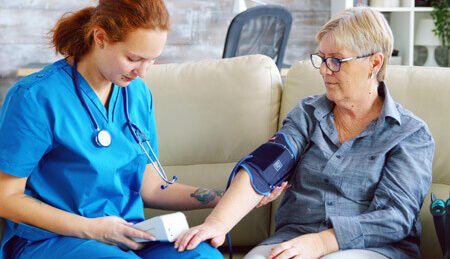
Home nursing care after surgery involves professional healthcare support provided at the patient’s home during the recovery period.
Depending on the patient’s condition and the treating doctor’s instructions, nursing support may include:
- Medication assistance
- Wound care and dressing changes
- Monitoring vital signs
- Personal hygiene support
- Mobility assistance
- Post-operative observation
- Nutrition and hydration support
- Follow-up coordination
- Communication with family members and healthcare professionals
The exact care required depends on the surgery, the patient’s age, health condition and discharge instructions.
DearDr provides nursing assistance through trained ANM and GNM professionals and supports patients with post-surgical care, wound care, medication management, vital monitoring and mobility assistance.
Why Is Post-Surgery Care at Home Important?
Surgery places stress on the body, and recovery can take time.
After discharge, patients may still have limited mobility, surgical wounds, medication schedules and restrictions on daily activities.
Without appropriate support, families may find it difficult to manage everything safely.
Structured home care can help with:
Safer Recovery
Regular observation can help families notice changes that may need medical attention.
Medication Management
Patients may have several medicines to take at different times. Nursing assistance can help maintain the prescribed schedule.
Wound Care
Surgical wounds may require dressing changes and observation according to the treating healthcare professional’s instructions.
Mobility Support
Patients may need assistance getting out of bed, walking or moving between rooms.
Personal Care
Bathing, dressing and other daily activities may temporarily become difficult after surgery.
Family Support
Professional assistance can reduce the physical burden on family members while keeping them involved in the recovery process.
10 Important Areas of Post-Surgery Home Care
1. Follow the Discharge Instructions Carefully
The discharge summary is one of the most important documents after surgery.
It may contain information about:
- Medicines
- Dosages
- Wound care
- Diet
- Physical activity
- Follow-up appointments
- Restrictions
- Warning signs
Families should keep these instructions accessible and follow the treating healthcare professional’s advice.
Do not change medicines or treatment plans without consulting the appropriate healthcare professional.
2. Manage Medicines on Schedule
After surgery, patients may be prescribed multiple medicines.
These may include medicines for pain, infection prevention, existing medical conditions or other post-operative requirements.
Missing doses or taking medicines incorrectly can create unnecessary complications.
A simple medication chart can help:
| Time | Medicine | Dose | Taken |
|---|---|---|---|
| Morning | As prescribed | As prescribed | ✓ |
| Afternoon | As prescribed | As prescribed | ✓ |
| Evening | As prescribed | As prescribed | ✓ |
| Night | As prescribed | As prescribed | ✓ |
A nurse can also assist with medication management according to the prescribed care plan.
3. Take Proper Care of the Surgical Wound
Wound care is an important part of recovery after many surgeries.
Depending on the procedure, the wound may require:
- Dressing changes
- Observation
- Cleaning according to medical instructions
- Monitoring for changes
- Follow-up with the treating doctor
Families should avoid applying home remedies, creams or other substances to a surgical wound unless specifically advised by a healthcare professional.
Contact the treating healthcare provider if there are concerning changes such as increasing redness, swelling, unusual discharge, worsening pain or fever.
4. Support Safe Movement
Patients may feel weak after surgery.
Getting up from bed, walking to the bathroom or climbing stairs can become difficult, particularly for elderly patients.
A caregiver or nurse may assist with movement according to the patient’s condition and medical instructions.
The home should also be made safer by:
- Removing loose rugs
- Keeping floors dry
- Clearing walkways
- Providing adequate lighting
- Keeping essential items within easy reach
- Using prescribed mobility equipment correctly
If physiotherapy has been recommended, exercises should be performed according to the qualified physiotherapist’s plan.
DearDr provides physiotherapy support at home for patients who require rehabilitation and mobility assistance.
5. Help With Personal Hygiene
After surgery, even simple activities may become difficult.
A patient may temporarily need assistance with:
- Bathing
- Dressing
- Grooming
- Toileting
- Changing clothes
- Moving between bed and chair
Professional assistance can help patients maintain comfort and dignity while they regain independence.
This can be particularly useful for elderly patients or people recovering from major surgery.
6. Maintain Appropriate Nutrition and Hydration
Recovery requires adequate nutrition and hydration, but dietary requirements can vary significantly depending on the surgery and the patient’s medical condition.
Follow the diet recommended by the treating doctor or qualified nutrition professional.
Families can make recovery easier by:
- Planning meals in advance
- Keeping drinking water accessible
- Following prescribed dietary restrictions
- Avoiding unnecessary supplements or remedies without professional advice
If the patient has conditions such as diabetes, kidney disease or heart disease, dietary requirements may need additional consideration.
7. Monitor the Patient’s Health
Regular monitoring may be recommended for some patients after surgery.
Depending on the care plan, this may include monitoring:
- Blood pressure
- Pulse
- Temperature
- Blood sugar
- Oxygen saturation
The frequency and type of monitoring should be determined by the patient’s healthcare team.
Nursing support can be particularly useful when regular observation is required.
DearDr’s nursing services include vital-sign monitoring alongside medication management and other post-surgical support.
8. Keep Follow-Up Appointments on Track
Recovery does not end when the patient returns home.
Follow-up appointments allow the treating doctor or surgeon to assess recovery and make changes to the care plan when required.
Keep a simple record of:
- Appointment dates
- Prescriptions
- Test reports
- Symptoms or concerns
- Questions for the doctor
If transportation is difficult, families can explore appropriate home-visit or teleconsultation options depending on the patient’s medical needs.
9. Provide Emotional Support
Surgery can be emotionally challenging.
A patient may feel:
- Frustrated by limited mobility
- Anxious about recovery
- Dependent on others
- Lonely
- Worried about returning to normal activities
Family members can help by being patient and encouraging appropriate independence.
Simple things such as conversation, companionship and maintaining a familiar routine can make the recovery period more comfortable.
10. Know When Professional Nursing Support Is Needed
Not every patient requires a full-time nurse after surgery.
Some patients may only need occasional assistance, while others may require regular or continuous support.
Professional home nursing may be useful when a patient:
- Requires wound dressing
- Needs medication assistance
- Has limited mobility
- Needs regular vital monitoring
- Requires personal-care assistance
- Is elderly or physically weak
- Has multiple medical conditions
- Needs continued observation after a major procedure
The level of care should be based on the patient’s actual medical and daily-care requirements.
When Should You Consider 24/7 Home Nursing?
Around-the-clock nursing is not automatically necessary for every post-surgical patient.
It may be considered when a patient requires frequent assistance or monitoring and cannot safely manage essential activities independently.
Examples may include patients who:
- Have significant mobility limitations
- Require frequent medical monitoring
- Need extensive personal-care assistance
- Are recovering from major surgery
- Have multiple ongoing health conditions
- Do not have a family member available for regular care
For stable patients who need only occasional assistance, part-time nursing or caregiver support may be sufficient.
The appropriate level of care should be discussed with the treating healthcare team.
DearDr also provides 24/7 nursing support for patients who require continuous assistance, including post-surgery patients, elderly individuals and people with chronic conditions.
How to Prepare Your Home Before the Patient Arrives
Preparing the home before discharge can make the transition easier.
Bedroom
Keep the bed easily accessible and place frequently used items nearby.
Bathroom
Depending on the patient’s mobility, consider appropriate safety measures such as:
- Non-slip surfaces
- Grab bars
- Adequate lighting
- Shower chair
- Raised toilet seat
Walking Areas
Remove:
- Loose rugs
- Clutter
- Unnecessary furniture
- Exposed electrical wires
Medicines
Keep prescribed medicines organized and easily accessible to the responsible caregiver.
Medical Equipment
If the patient requires equipment such as a hospital bed, wheelchair, oxygen support or monitoring equipment, arrange it before or soon after discharge according to the medical care plan.
DearDr provides medical equipment support and home ICU setup when medically appropriate.
Warning Signs That Need Medical Attention
Families should follow the discharge instructions provided by the treating healthcare team.
Seek medical advice promptly if the patient develops concerning symptoms such as:
- Difficulty breathing
- Chest pain
- Loss of consciousness
- Severe or rapidly worsening pain
- Significant bleeding
- High or persistent fever
- Increasing wound redness or swelling
- Unusual discharge from the wound
- Sudden confusion
- New weakness or other sudden neurological symptoms
For a medical emergency, seek emergency medical care rather than relying only on home nursing support.
How Family Members Can Support Recovery
Professional nursing does not replace family involvement.
Families can still play an important role by:
Staying informed
Know the patient’s diagnosis, treatment plan and follow-up schedule.
Maintaining communication
Keep regular communication between the patient, nurse, doctor and family.
Tracking recovery
Maintain a simple record of medicines, appointments, symptoms and relevant measurements.
Encouraging independence
Allow patients to perform activities they can safely manage themselves.
Being patient
Recovery may take time, and progress can vary from person to person.
Home Nursing vs. Managing Everything Yourself
Many families initially try to manage post-surgery care without professional help.
This may work when the patient is stable, independent and has family members available.
However, professional support can become valuable when the care requirements increase.
| Family-Managed Care | Professional Home Nursing |
|---|---|
| Family handles daily care | Trained professional provides assistance |
| May be difficult with work commitments | Provides scheduled support |
| Medical tasks may be challenging | Nursing tasks can be handled by qualified staff |
| Family monitors recovery | Regular observation can be arranged |
| Suitable for independent patients | Useful for patients needing additional support |
The right option depends on the patient’s condition, doctor’s recommendations and family availability.
Why Choose DearDr for Post-Surgery Home Nursing in Kolkata?
DearDr provides home healthcare support for patients and families in Kolkata.
Its nursing assistance is provided by qualified ANM and GNM professionals, with services including wound care, dressing changes, medication management, vital-sign monitoring, mobility assistance, personal hygiene support and post-surgical recovery assistance.
DearDr’s broader home healthcare services also include:
- Doctor home visits
- Nursing assistance
- Physiotherapy
- Medical equipment support
- Home ICU setup
- Palliative care
- Medicines at home
- Pathology assistance
- Ambulance support
This allows families to coordinate different aspects of recovery without making frequent trips to healthcare facilities.
Post-Surgery Home Care Checklist
Before bringing your loved one home, check:
☐ Discharge instructions are available
☐ Prescribed medicines have been purchased
☐ Medication schedule is clear
☐ Wound-care instructions are understood
☐ Follow-up appointment is scheduled
☐ Bedroom is prepared
☐ Bathroom is safe
☐ Walking paths are clear
☐ Required medical equipment is available
☐ Emergency contacts are accessible
☐ Nursing support is arranged if required
☐ Physiotherapy is arranged if prescribed
Frequently Asked Questions
How long does home nursing care after surgery last?
There is no fixed duration. It depends on the type of surgery, the patient’s condition, mobility, wound-care needs and doctor’s recommendations.
Some patients may need support for a few days, while others may require assistance for several weeks or longer.
Is home nursing necessary after every surgery?
No. Patients who are stable and independent may be able to recover with family support. Professional nursing is more useful when the patient requires medical assistance, monitoring or help with daily activities.
Can a nurse provide wound dressing at home?
Qualified nursing professionals can assist with wound care and dressing according to the prescribed care plan. Any concerning wound changes should be discussed with the treating healthcare professional.
Can physiotherapy be provided at home after surgery?
Yes, home physiotherapy may be appropriate for patients who have been advised to undergo rehabilitation. The treatment plan should be determined by a qualified physiotherapist based on the patient’s condition.
Can elderly patients receive post-surgery nursing care at home?
Yes. Elderly patients may benefit from additional assistance with medication, mobility, personal care, wound management and monitoring during recovery.
What should I look for when choosing home nursing care in Kolkata?
Look for appropriately qualified professionals, clear communication, availability suited to the patient’s needs, transparent service information and coordination with the treating healthcare team.
Final Thoughts
Going home after surgery is an important step, but recovery continues beyond the hospital.
With the right preparation, medication management, wound care, mobility support, nutrition, follow-up and professional assistance when needed, families can create a more organised recovery environment at home.
For patients who need additional medical or personal support, home nursing care after surgery can help bridge the gap between hospital discharge and returning to everyday life.
If your loved one needs professional post-surgical support in Kolkata, DearDr can help arrange nursing assistance and other home healthcare services according to the patient’s needs.
DearDr — Healthcare at Home, When You Need It.

