How to Coordinate Hospital Discharge and Follow-Up Care for Patients in Kolkata
Hospital Discharge and Follow-Up Care in Kolkata
Hospital discharge is an important milestone in a patient’s recovery, but it does not always mean that medical care is complete. Many patients continue to need follow-up consultations, prescribed medicines, diagnostic tests, wound care, physiotherapy, or assistance with daily activities after returning home.
For families in Kolkata, coordinating these requirements can become challenging, especially when the patient is elderly, recovering from surgery, has limited mobility, or needs regular medical supervision.
Without proper planning, important appointments may be missed, prescriptions can become confusing, and families may struggle to arrange the right healthcare support at the right time.
A structured approach to hospital discharge and follow-up care in Kolkata can help families manage the transition from hospital to home more effectively. With services such as doctor home visits, nursing assistance, pathological services, physiotherapy, and medical equipment support, DearDr helps families explore healthcare options that suit their needs.
Why Is Hospital Discharge Planning Important?
Hospital discharge involves more than arranging transportation home. Patients and caregivers need to understand the treatment received, the medicines prescribed, the next medical appointments, and any special instructions provided by the treating team.
Proper discharge planning helps families:
- Understand the patient’s ongoing healthcare requirements.
- Arrange follow-up consultations on time.
- Manage medicines according to the prescription.
- Coordinate recommended blood tests and other investigations.
- Identify whether nursing or physiotherapy support is required.
- Recognise warning signs that need prompt medical attention.
Planning these arrangements before leaving the hospital can reduce confusion and help patients continue their recovery with better organisation.
1. Collect and Review All Discharge Documents
Before leaving the hospital, make sure you receive the necessary documents and understand the instructions provided by the treating doctor.
Important documents may include:
- Hospital discharge summary.
- Final prescriptions and medication instructions.
- Diagnostic and laboratory reports.
- Surgical or treatment notes, where applicable.
- Wound care or dressing instructions.
- Dietary and activity recommendations.
- Follow-up appointment details.
- Contact information for the treating doctor or hospital department.
Ask the healthcare team to explain any instructions that are unclear. If several medicines have been prescribed, confirm their names, dosages, timings, and duration.
Keep the documents together in a dedicated folder. This makes it easier to share relevant information during subsequent consultations, diagnostic appointments, or home visits.
2. Schedule Follow-Up Doctor Appointments Before Discharge
One of the most important steps after hospitalisation is arranging the next consultation.
The timing of follow-up appointments depends on the patient’s diagnosis, treatment, surgery, and recovery progress. Some patients may need a review within a few days, while others may have a different schedule recommended by their doctor.
Before discharge, confirm:
- The date and time of the next appointment.
- Which doctor or specialist the patient needs to consult.
- Whether the consultation should take place at a hospital, clinic, or home.
- Whether any reports must be available before the appointment.
- Whether the patient needs assistance with transportation.
For patients who find travelling difficult, a doctor home visit in Kolkata may be a convenient option when clinically appropriate and available.
DearDr offers doctor home visit services that can help families explore consultation options without always requiring the patient to travel to a clinic. The suitability of a home visit depends on the patient’s condition and the doctor’s assessment.
3. Organise Medicines and Follow the Prescription
Medication management is an important part of post-discharge care. Patients may receive new prescriptions, changes to existing medicines, or temporary medicines that must be taken for a specific duration.
To manage the schedule effectively:
- Create a written list of all prescribed medicines.
- Record the prescribed dosage and timing.
- Note the duration of each medicine, where specified.
- Separate discontinued medicines from current prescriptions.
- Set reminders if the patient or caregiver may forget a dose.
- Arrange refills before the current supply runs out.
If the patient takes medicines for several health conditions, ask the treating doctor or pharmacist to clarify any uncertainties about the prescription.
Do not restart discontinued medicines, change dosages, or stop prescribed treatment without appropriate medical advice.
DearDr’s medicine delivery services may also help families arrange prescribed medicines at home, subject to availability and the applicable requirements.
4. Coordinate Follow-Up Tests and Diagnostic Services
Some patients need repeat blood tests, urine tests, imaging, or other investigations after leaving the hospital. These tests may help doctors assess recovery, monitor an existing condition, or determine whether further treatment is required.
Families should confirm the following details:
- Which tests have been prescribed.
- When each test should be completed.
- Whether fasting or any other preparation is required.
- When and how the reports will be available.
- How the reports should be shared with the treating doctor.
Avoid arranging unnecessary tests independently. Follow the recommendations of the treating healthcare professional.
For patients who have difficulty travelling, home sample collection may be a practical option for eligible tests. DearDr offers pathological assistance, including home-based diagnostic support, subject to test availability and service coverage.
5. Determine Whether Home Nursing or Physiotherapy Is Needed
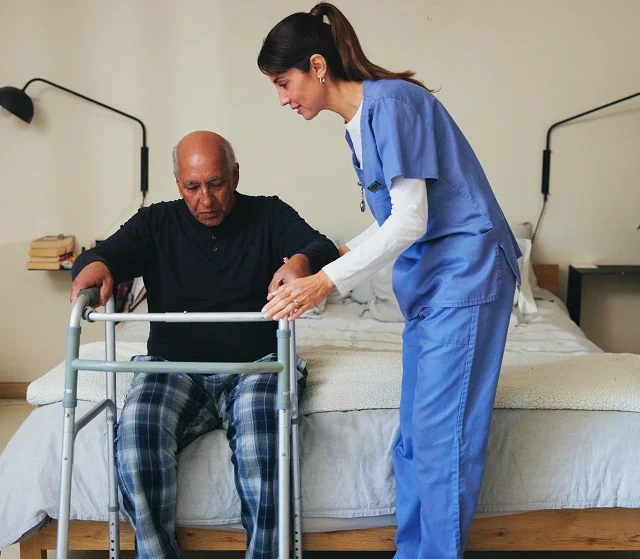
Not every patient requires professional care at home after discharge. However, additional assistance may be beneficial when a patient has limited mobility, requires wound care, needs help with prescribed care routines, or is recovering from surgery or a serious illness.
Depending on the patient’s condition and care plan, families may need to explore:
Home Nursing Assistance: For nursing needs such as prescribed wound care, dressing changes, clinical monitoring, and other appropriate nursing procedures.
Physiotherapy Support: For patients whose treating doctor recommends rehabilitation to improve mobility, strength, balance, or functional independence.
Medical Equipment Support: For patients who need equipment such as a hospital bed, wheelchair, or other medically appropriate devices.
Home ICU Setup: For selected patients who require a specialised home-care environment, subject to clinical assessment, equipment requirements, and professional supervision.
DearDr offers several home healthcare services that families can explore according to their patient’s needs. The required level of care should be determined with the treating medical team rather than assumed based on the diagnosis alone.
6. Create a Follow-Up Care Calendar
When several appointments, medicines, and investigations need to be managed, a written calendar can make coordination easier.
A simple care calendar can include:
| Care requirement | Details to record |
|---|---|
| Doctor consultation | Date, time, doctor, and appointment location |
| Medication schedule | Medicine name and prescribed timing |
| Diagnostic tests | Test name, date, and preparation instructions |
| Nursing assistance | Scheduled visits and prescribed care tasks |
| Physiotherapy | Session dates and professional instructions |
| Medical reports | Expected report dates and review arrangements |
A family member or designated caregiver should maintain the calendar and update it whenever the doctor changes the treatment plan.
Digital calendars and phone reminders can be particularly useful when several family members share caregiving responsibilities.
7. Keep Family Members and Healthcare Providers Informed
Care coordination becomes more complicated when the patient’s children or relatives live in different locations.
In these situations, designate one primary family contact who can communicate with the patient, manage appointment details, and share important updates with other relatives.
Maintain a secure, up-to-date record of:
- Discharge instructions.
- Current prescriptions.
- Follow-up appointment dates.
- Recent test results.
- Healthcare provider contact details.
- Changes in symptoms or recovery progress.
Share medical information only with authorised family members and healthcare professionals.
For patients receiving home nursing or other professional services, make sure the relevant caregivers understand the prescribed care plan and know how to communicate concerns to the appropriate medical professional.
8. Recognise Warning Signs That Require Medical Attention
Follow-up care is also about recognising when a patient’s condition is not improving as expected.
Depending on the illness or procedure, concerning symptoms may include:
- Increasing pain or swelling.
- Fever or chills.
- New or worsening wound redness, discharge, or bleeding.
- Persistent vomiting or inability to keep fluids down.
- Sudden deterioration in mobility or general condition.
- New confusion or unusual drowsiness.
These symptoms should be assessed according to the patient’s discharge instructions and medical advice.
Seek urgent medical attention for serious warning signs such as severe breathing difficulty, chest pain, sudden facial drooping or weakness, loss of consciousness, or uncontrolled bleeding. Do not wait for a routine follow-up appointment if an emergency occurs.
9. Make Follow-Up Care Easier for Elderly and Mobility-Challenged Patients
Older adults and patients with restricted mobility may face additional difficulties after discharge. Travelling to appointments, standing in queues, or managing several prescriptions can become physically demanding.
Families can help by arranging suitable transportation, preparing documents in advance, maintaining a medication schedule, and exploring appropriate home healthcare services.
A doctor home visit may be suitable for certain consultations, while nursing assistance, physiotherapy, or medical equipment may help address other needs.
However, home-based care is not appropriate for every medical situation. Patients with serious or worsening symptoms may require hospital assessment or emergency treatment.
The goal is to choose the right care setting for the patient’s condition, while following the treating doctor’s recommendations.
How DearDr Can Help With Hospital Discharge and Follow-Up Care in Kolkata
DearDr provides healthcare services that families can explore when organising medical support after hospital discharge.
Depending on the patient’s needs and service availability, these include:
- Doctor Home Visits: Medical consultations at home for suitable patients.
- Nursing Assistance: Support for appropriate nursing and care requirements.
- Pathological Assistance: Diagnostic testing and home sample collection options.
- Medicines at Home: Assistance with arranging prescribed medicines.
- Physiotherapy Support: Home-based rehabilitation services when appropriate.
- Medical Equipment Support: Options for relevant home-care equipment.
- Ambulance Support: Assistance with arranging ambulance services when required.
Families should discuss the patient’s medical condition, required services, availability, and scheduling before making arrangements.
By coordinating the appropriate services and keeping medical instructions organised, families can make the transition from hospital to home more manageable.
Frequently Asked Questions
1. What should families do immediately after hospital discharge?
Review the discharge summary, understand the medication instructions, confirm follow-up appointments, arrange any prescribed tests, and identify whether the patient needs nursing or other home healthcare support.
2. When should a patient have their first follow-up appointment?
The timing depends on the diagnosis, procedure, and recovery requirements. Follow the discharge instructions and confirm the appointment schedule with the treating doctor before leaving the hospital.
3. Can a doctor visit a patient at home in Kolkata?
Yes. Doctor home visits are available through providers such as DearDr for suitable medical consultations, subject to location, availability, and clinical assessment. Emergencies requiring immediate hospital treatment should not be managed through a routine home visit.
4. Can diagnostic tests be arranged after hospital discharge?
Yes. Doctors may prescribe follow-up tests to monitor recovery or assess a patient’s condition. Eligible tests may be arranged through diagnostic providers offering home sample collection, depending on availability and preparation requirements.
5. Does every patient need home nursing after discharge?
No. The need for nursing depends on the patient’s medical condition, mobility, treatment, and ability to manage daily care. The treating healthcare team can advise whether professional nursing assistance is necessary.
6. How can families coordinate follow-up care when living outside Kolkata?
Families can maintain a shared appointment calendar, keep medical records organised, coordinate with authorised local caregivers, and arrange suitable home healthcare services. One designated family contact can help manage communication and appointments.
Conclusion
Hospital discharge is the beginning of the next stage of recovery, and proper coordination can help families manage this transition with greater confidence.
From organising prescriptions and scheduling follow-up consultations to arranging diagnostic tests, nursing assistance, and physiotherapy, each step should be guided by the patient’s medical requirements.
For families looking for hospital discharge and follow-up care in Kolkata, DearDr offers a range of home healthcare services that can help make appropriate medical support more accessible.
Need help coordinating healthcare after hospital discharge? Contact DearDr to explore doctor home visits, diagnostic assistance, nursing support, and other home healthcare services in Kolkata.
Contact DearDr
Website: https://deardr.in/
Phone: +91 90883 34009
Email: info@deardr.in
Address: Molina Apartment, Bijoygarh, Sree Colony, Regent Estate, Kolkata, West Bengal – 700092.
Disclaimer: This article is for general informational purposes only and does not replace professional medical advice. Always follow the treating doctor’s discharge instructions and seek urgent medical care when required.